First preheat the oven to 230°C/450°F/Gas Mark 8.
Mix the wholemeal and white flour in a large bowl. Add the carefully measured salt and sieved bicarbonate of soda.
Mix well, add the diced butter and rub into the flour to resemble coarse breadcrumbs.
Crack an egg into a measuring jug, whisk with a fork, then add the buttermilk to measure 400-425ml (14-15fl oz/1 3/4 – generous 1 3/4 cups) in total.
Make a well in the centre of the dry ingredients, pour in most of the liquid and mix in a full circular movement from the centre to the outside of the bowl to form a dough.(add a little more buttermilk if necessary). Wash and dry your hands.
Sprinkle wholemeal flour on the worktop, turn the dough onto the floured surface.
With floured hands, shape the dough into a round, about 5cm (2 inch) thick. Flip over and tidy around the edges. Slide your floured hand underneath and transfer to a floured baking tray.
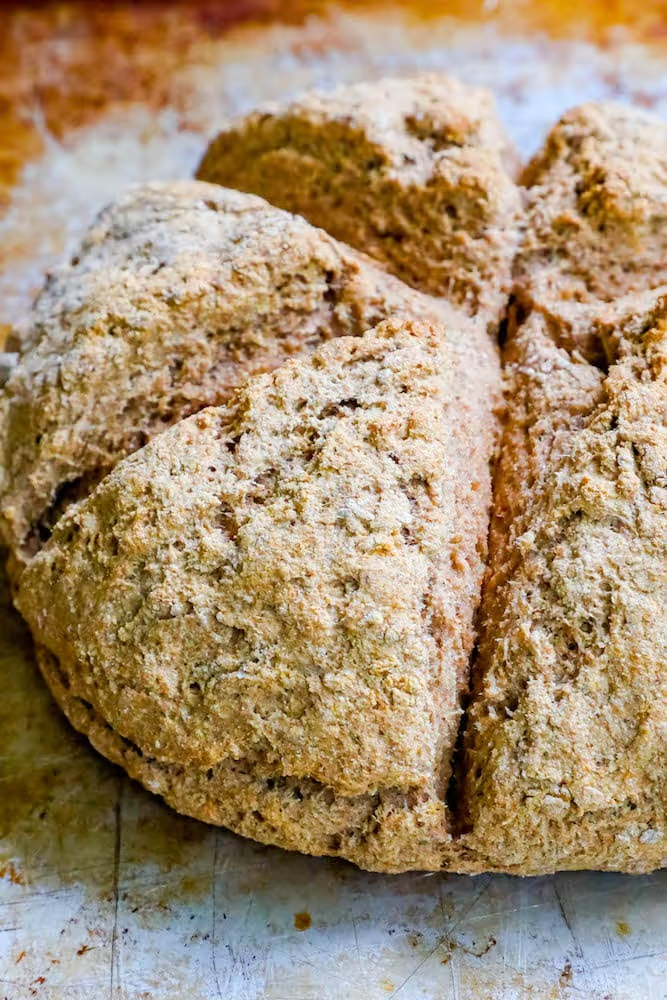
Cut a deep cross, the traditional blessing and prick in the four corners to let the fairies out of the bread.
Put into the preheated oven and cook for 10 minutes, reduce the temperature to 200°C/400°F/Gas Mark 6 and cook for 25 minutes or until the loaf looks baked. Flip the loaf over for 5-10 minutes at the end of cooking to make sure it’s fully cooked – it should sound hollow when tapped on the base.
Cool on a wire rack, wrapped in a clean tea-towel while hot if you prefer a softer crust.
To serve break the bread in two, cut into thick slices from the heel, traditionally served slathered with butter.
Best eaten on the day it’s made.
Variations
One could add 1 tablespoon (1 American tablespoon + 1 teaspoon) of fine oatmeal or bran or wheatgerm, 1 egg and 12g (1/2oz) butter to the above to make a richer soda bread dough.
Make the dough as above. Form it into a round and flatten to 4cm (1 1/2 inch) thick approx. Stamp out into scones with a cutter or cut with a knife. Brush the top of the scones with buttermilk, dip each one in kibbled wheat. Bake for about 30 minutes in a hot oven (see above).
Note: Bread should always be cooked in a fully pre-heated oven, but ovens vary enormously so it is necessary to adjust the temperature accordingly.
*If a lighter bread is preferred, use 450g (1lb/generous 3 cups) white flour and 150g (5oz/1 1/4 cups) brown wholemeal flour.
If you can’t buy commercial buttermilk easily, or want full-fat buttermilk, here is a simple method for producing your own. Commercial buttermilk is usually made with low-fat milk. This version, made with full-cream milk, will give you rich, thick buttermilk. To make low-fat buttermilk, use low-fat milk and 1 tablespoon (1 American tablespoon + 1 teaspoon) of white vinegar.
Makes 225ml (8fl oz/1 cup)
Put the milk into a deep bowl with the vinegar or lemon juice and leave to stand at room temperature for about 15 minutes. The milk will start to curdle. Stir well before using and store in a fridge in a covered container. The buttermilk will keep for a couple of days.